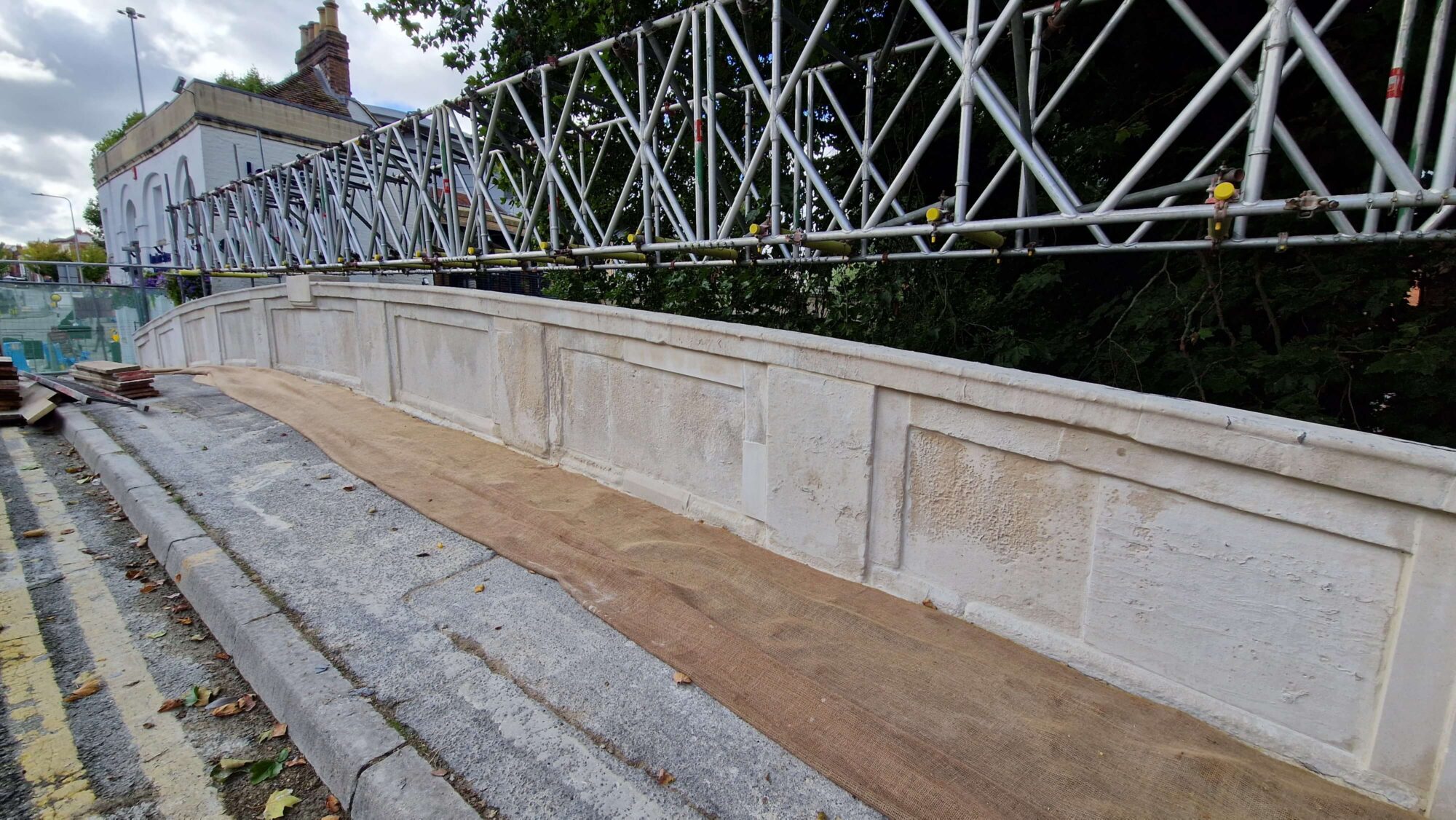
STONEMASONRY REPAIR WORK TO HIGH BRIDGE READING
Cliveden Conservation was instructed by Principal Contractor VolkerLaser to carry out stonemasonry repair works to High Bridge in Reading town centre.
High Bridge is the oldest surviving bridge in Reading and is both Grade II listed and a Scheduled Ancient Monument. It was designed in 1788 by Sir John Soane although it was partially remodelled in the late 19th or early 20th century.
High Bridge is a busy thoroughfare, used by a variety of traffic, including several bus routes and pedestrians. It crosses a busy section of the River Kennet.
The Portland stone parapets were suffering from extensive weathering and environmental decay due to their proximity to the busy road. Both parapets were also leaning outwards, the west side quite notably due in part to significant rust jacking of iron fixings.
The High Bridge project presented various challenges, both technically and logistically. Prelims, temporary works and access, including a partial road closure and complicated hanging scaffold to allow waterside access was undertaken by specialist contractor VolkerLaser.
Conservation approach
While a minimal intervention approach was initially proposed for the parapets’ conservation, ThermaTech cleaning of the stonework revealed that a more extensive programme of works would be necessary to ensure the bridge’s stability.
Cliveden Conservation determined it was necessary to carefully dismantle a significant section of each parapet and rebuild them plumb in the correct position to restore the stability of the parapet walls. Contracted engineers Stantec and VolkerLaser in-house engineers supported this decision. An updated specification and methodology was presented to Historic England.
The revised specification raised concerns among stakeholders regarding project duration and the extent of stone replacement. Through careful planning and clear communication of the proposed methodology, Cliveden Conservation addressed these concerns while adhering to the original programme.
Stonemasonry work undertaken
The parapets were carefully recorded. Measurements, datums and photographs were taken and each stone given its own reference and orientation marks.
Dismantling the parapets enabled Cliveden Conservation stonemasons to remove rusting iron fixings and replace them with stainless steel equivalents.
Where necessary, new stone was introduced with indents or whole stone replacements, including partial and full replacement of the west and east date stones respectively. The lettering was carefully studied, set out and cut by Cliveden Conservation’s master mason Ben Newman to match the original style.
The coping stones were refixed using as many of the historic bronze dog-cramps as possible; iron ones were replaced. The dog-cramps were then sealed with lead, expertly poured and trimmed by Jack Silk and his team.
Results
Due to careful dismantling and sensitive repair, Cliveden Conservation retained over 85% of the original stone, as originally predicted.
The project has drastically improved the appearance of the parapets, generating positive interactions with the public, particularly the local community for whom the bridge is a treasured landmark. The parapets are now structurally sound and have been preserved for future generations.
Effective collaboration between all parties ensured that the project was delivered on schedule. The High Bridge project demonstrates successful integration of specialist expertise across construction industry sectors.
Project details
Client:
VolkerLaser
Specialist Subcontractor:
Cliveden Conservation
Category:
Stonework
What we did
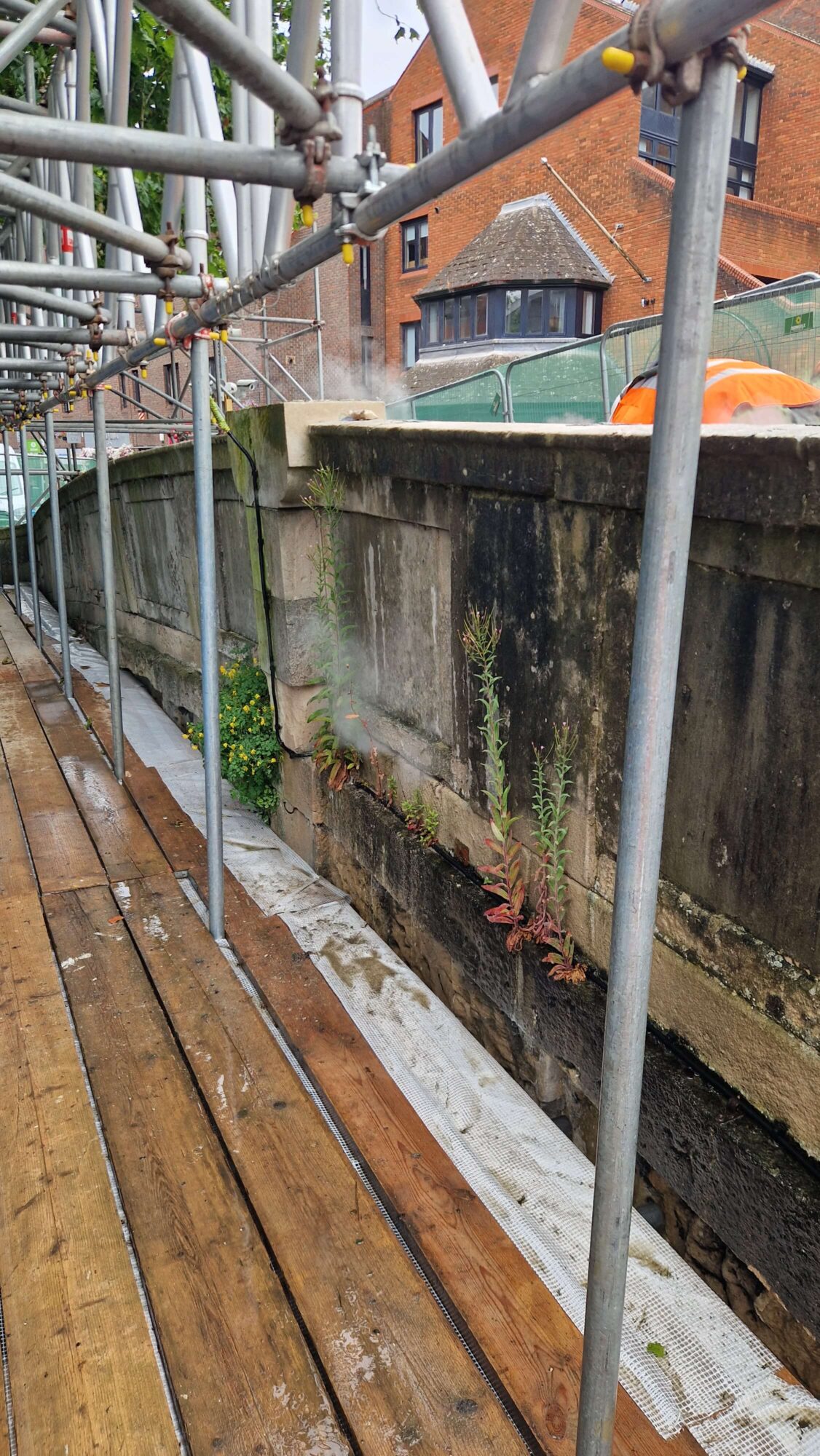
The west parapet prior to conservation.
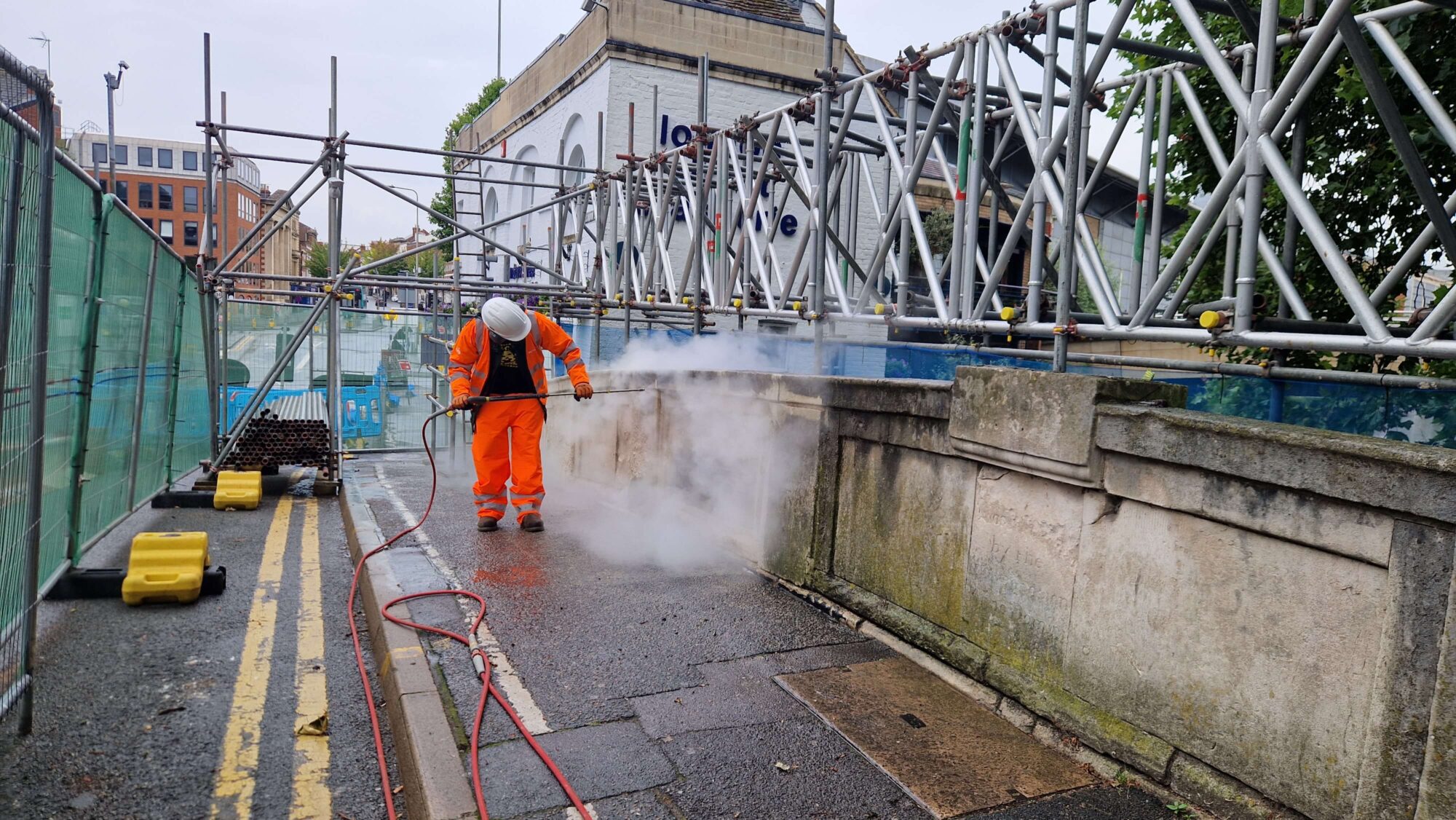
Stone cleaning of the parapets using ThermaTech equipment.
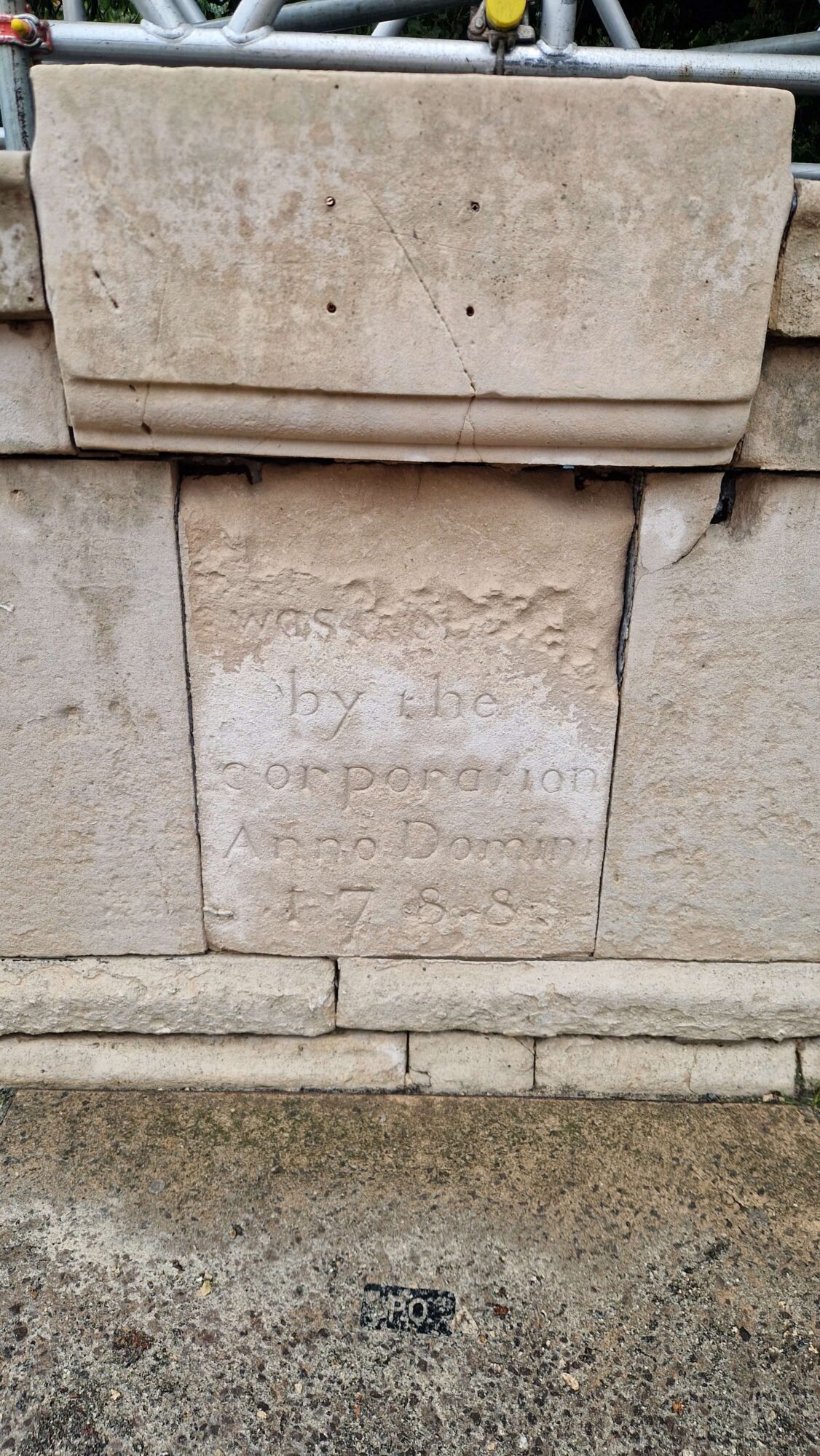
Extensive weathering to the Portland stone.

Rusting historic fixings causing damage to the fabric.
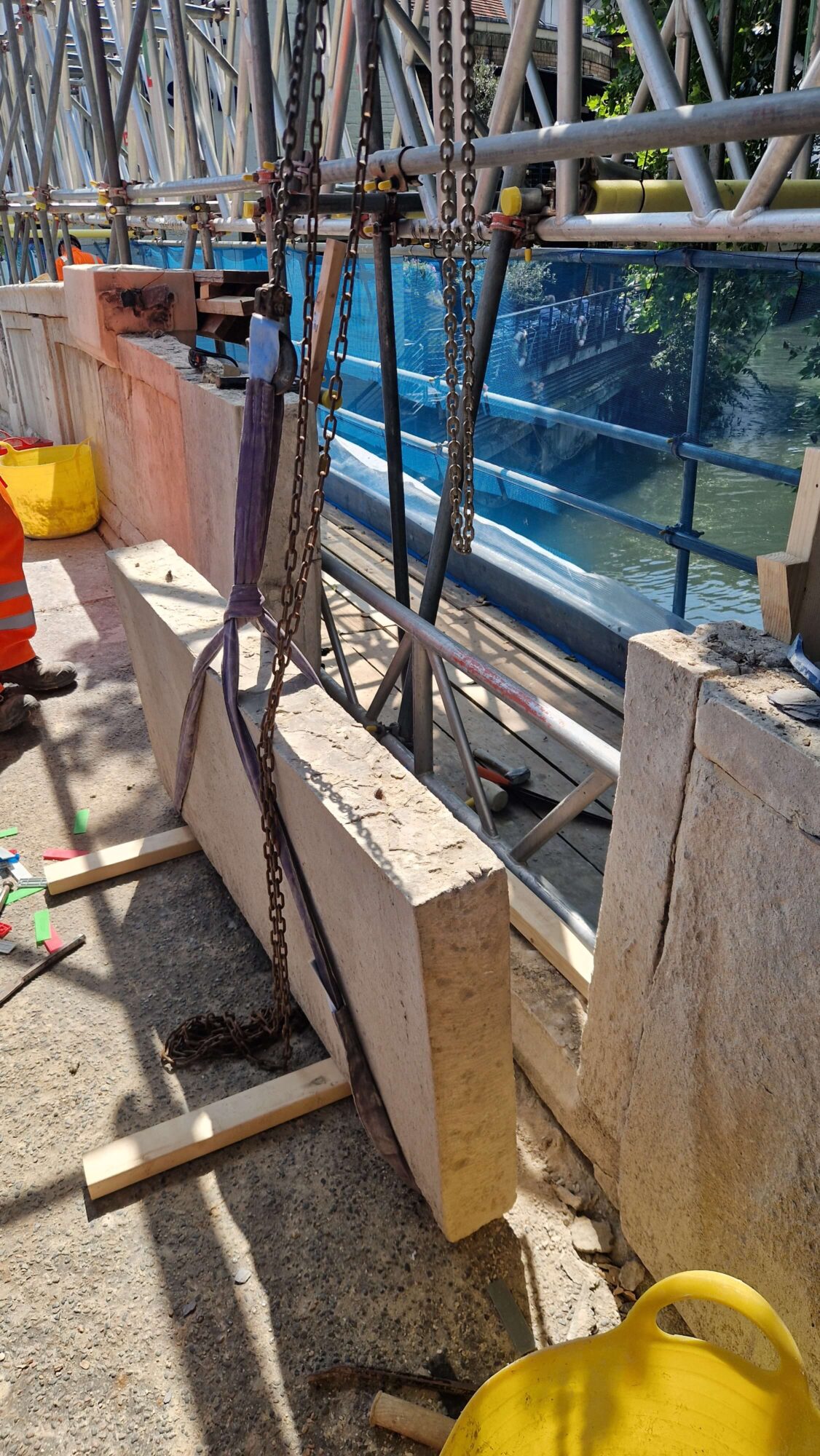
Careful dismantling of the parapets.
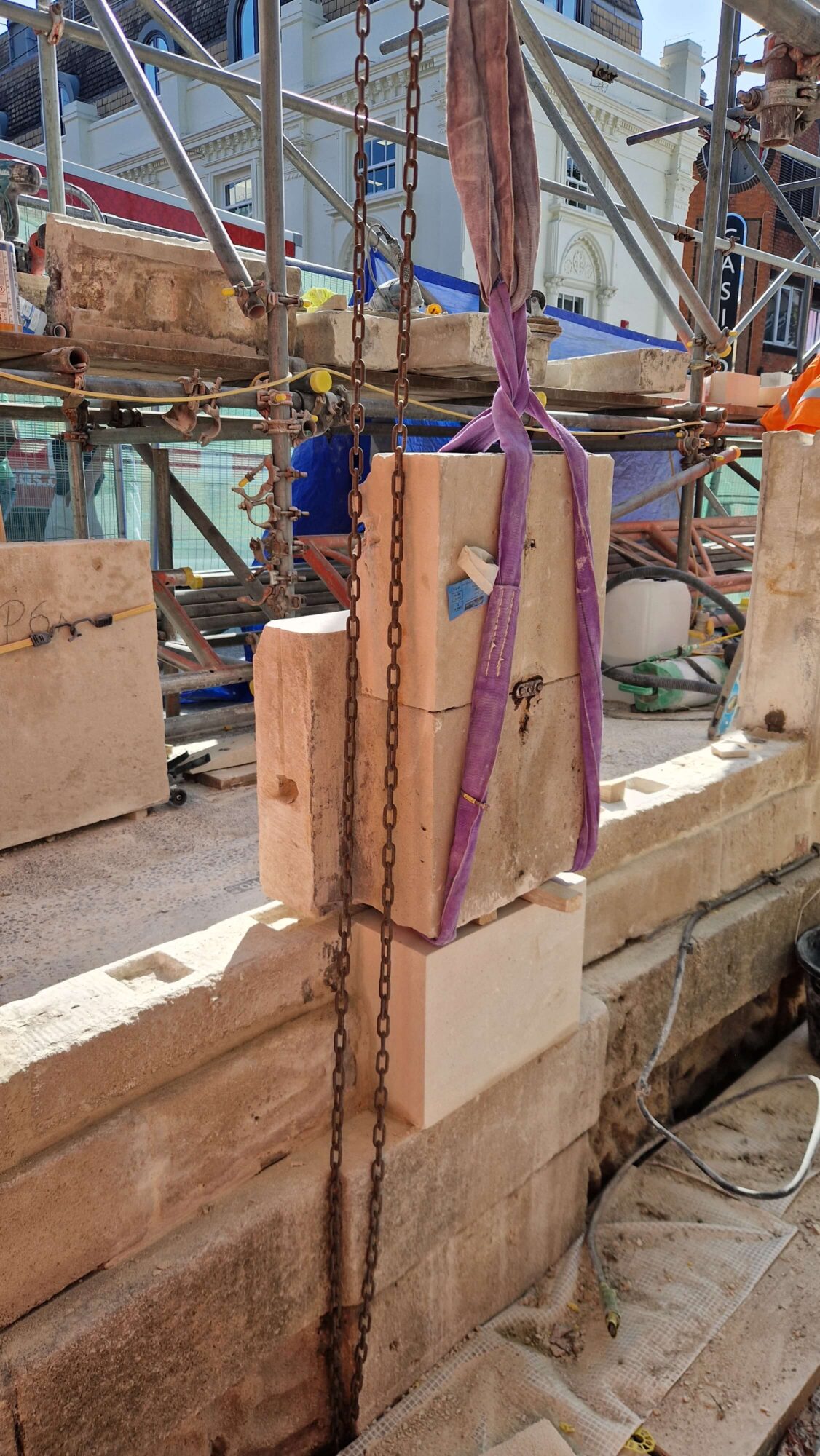
Rebuilding the parapets with new stone incorporated.
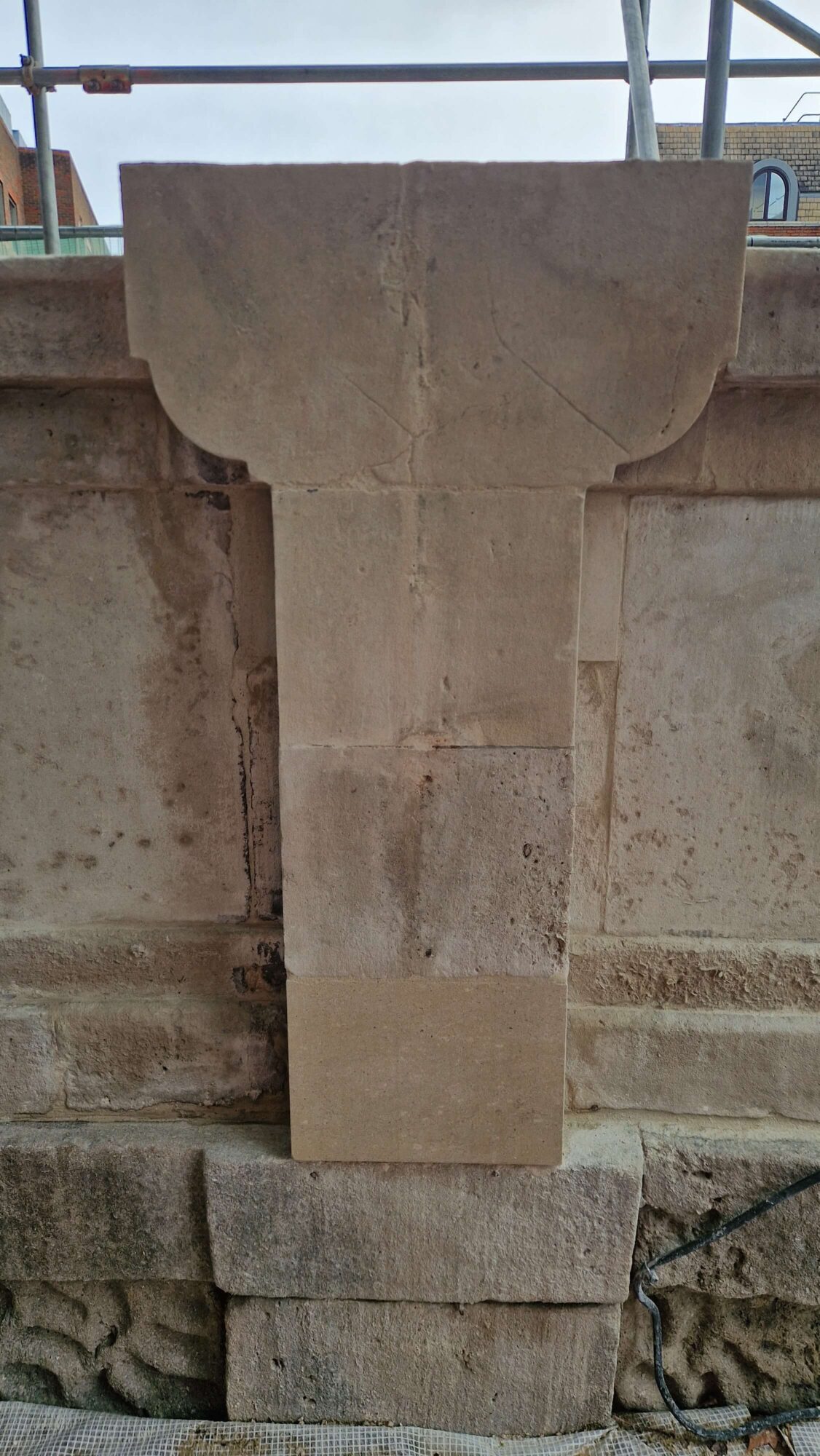
Supporting column for street lamp rebuilt.