
WALL PAINTING CONSERVATION | HISTORIC HOUSE
Plumpton House forms the central range of a Grade II listed manor house with 16th-century origins: it was substantially remodelled in the early 19th century. The building, recognised for its architectural and historic significance, was among the first properties in the area to be listed by St Edmundsbury Council in the 1950s.
During the First World War, the house served as a convalescent hospital for French and Belgian soldiers. In 1916, Robert De Lannoy, a French soldier, executed a mural in the entrance hall depicting Queen Philippa interceding with Edward III to spare the Burghers of Calais. He also painted a decorative floral frieze in one of the principal reception rooms. De Lannoy was subsequently killed in action.
Both wall paintings were found to be in a fragile condition and exhibited widespread flaking and structural cracking. The owner of the house appointed Cliveden Conservation to stabilise the paintings.
Condition Assessment
The Burghers of Calais painting in the entrance hall was identified as oil paint on a plaster substrate. The painted surface displayed numerous fine diagonal cracks. Paint layers were actively lifting, cupping and flaking across extensive areas. The instability of the paint film rendered the mural highly vulnerable; without timely intervention, significant paint loss was considered imminent.
The decorative frieze in the reception room, also oil on plaster and extending around the perimeter of the room, presented comparable deterioration. Severe flaking and active paint loss were evident; this had compromised both the aesthetic legibility and physical stability of the scheme.
The principal objectives of the conservation work were to stabilise the deteriorating paint layers, secure vulnerable areas and reintegrate losses to improve visual coherence, while ensuring that interventions adhered to established conservation principles of minimal intervention and reversibility. The client also wished to be able to use the entrance hall and reception room without the concern of further deterioration.
Conservation Treatment
A programme of careful stabilisation and aesthetic reintegration was undertaken by Cliveden Conservation.
Surface dust and cobwebs were removed using soft brushes under controlled conditions. Structural cracks were consolidated and filled using a compatible plaster-based filler. The fills were toned with conservation-grade acrylic paints to integrate visually with the surrounding scheme. All fill materials were selected for their stability, flexibility, and reversibility.
Following trials, active paint flaking was addressed through localised consolidation. The lifting and curling paint flakes were readhered to the plaster substrate using Lascaux 4176 acrylic dispersion, applied beneath the flakes and set under gentle pressure using Japanese tissue and acetate. The consolidant allowed for the paint to be softened, realigned and secured without causing any disruption to the surrounding surface.
Following stabilisation, areas of loss were retouched using UV stable conservation acrylics, ensuring visual integration while remaining distinguishable upon close professional inspection. All materials and methods employed were fully reversible and in accordance with current conservation standards.
Results
The wall paintings are now secure, stable and visually unified, allowing the spaces to be used by the client with confidence. All vulnerable paint has been successfully stabilised and readhered. Structural cracks are filled and visually integrated. Retouching achieved a sympathetic colour match, restoring legibility and coherence to both schemes while maintaining the integrity of the original work. The project was completed within the agreed timeframe and budget.
Project details
Client:
Plumpton House
Specialist Contractor
Cliveden Conservation
Category:
Decorative arts
What we did

The Burghers of Calais mural before conservation treatment.
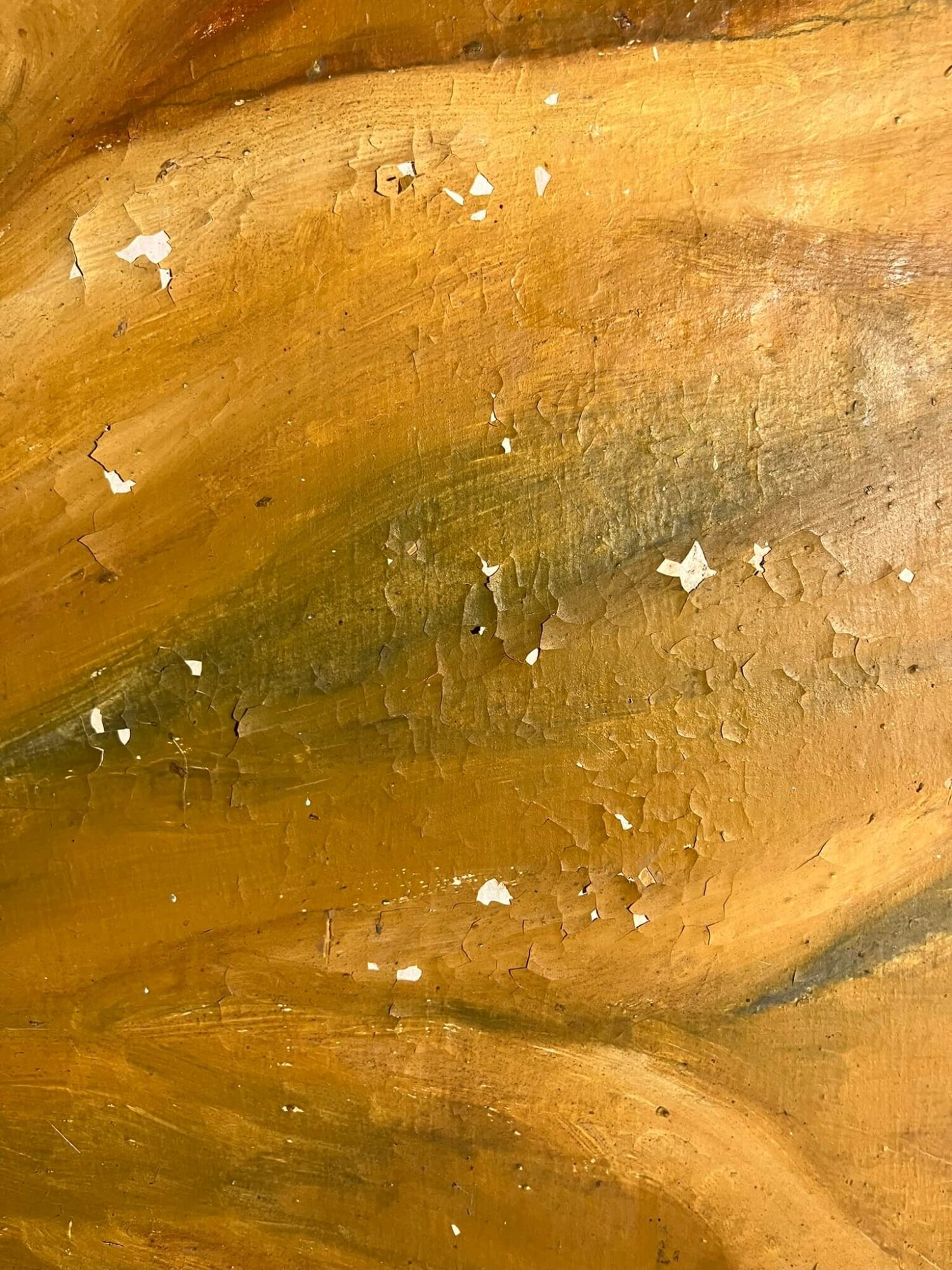
Painted surface showing cupping and flaking paint before conservation treatment.
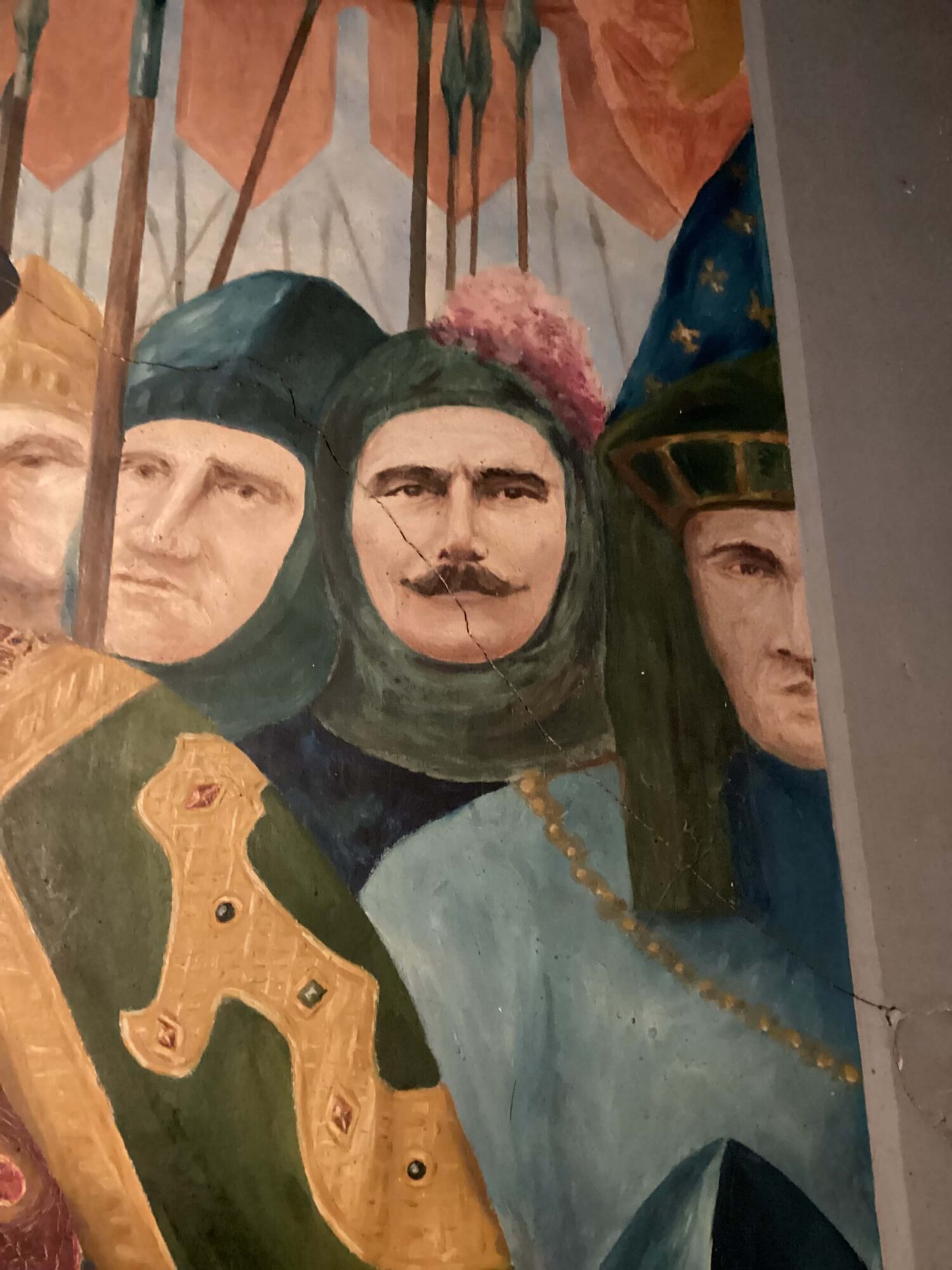
Crack in the mural before treatment.
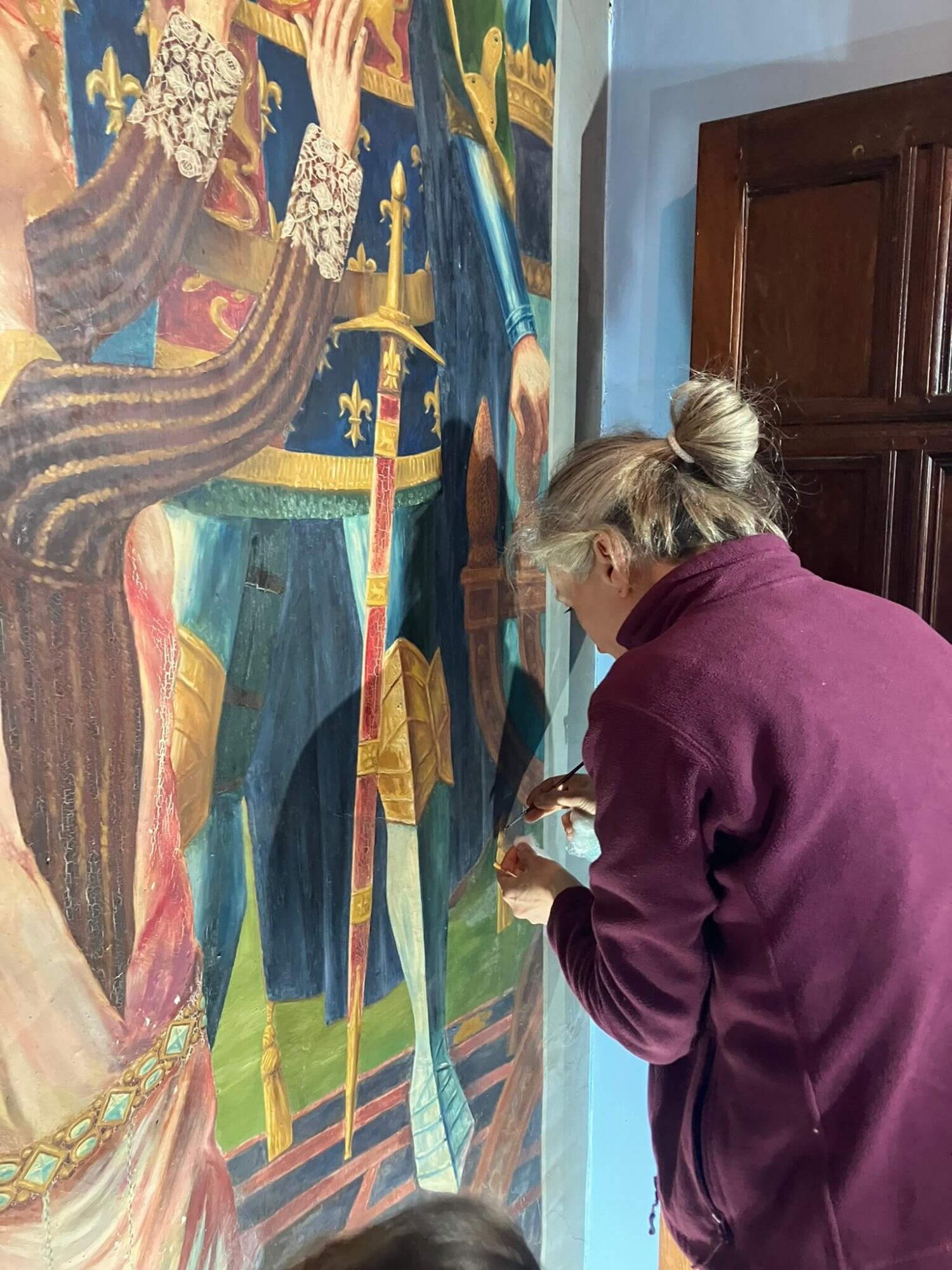
Conservator working on the Burghers of Calais mural.
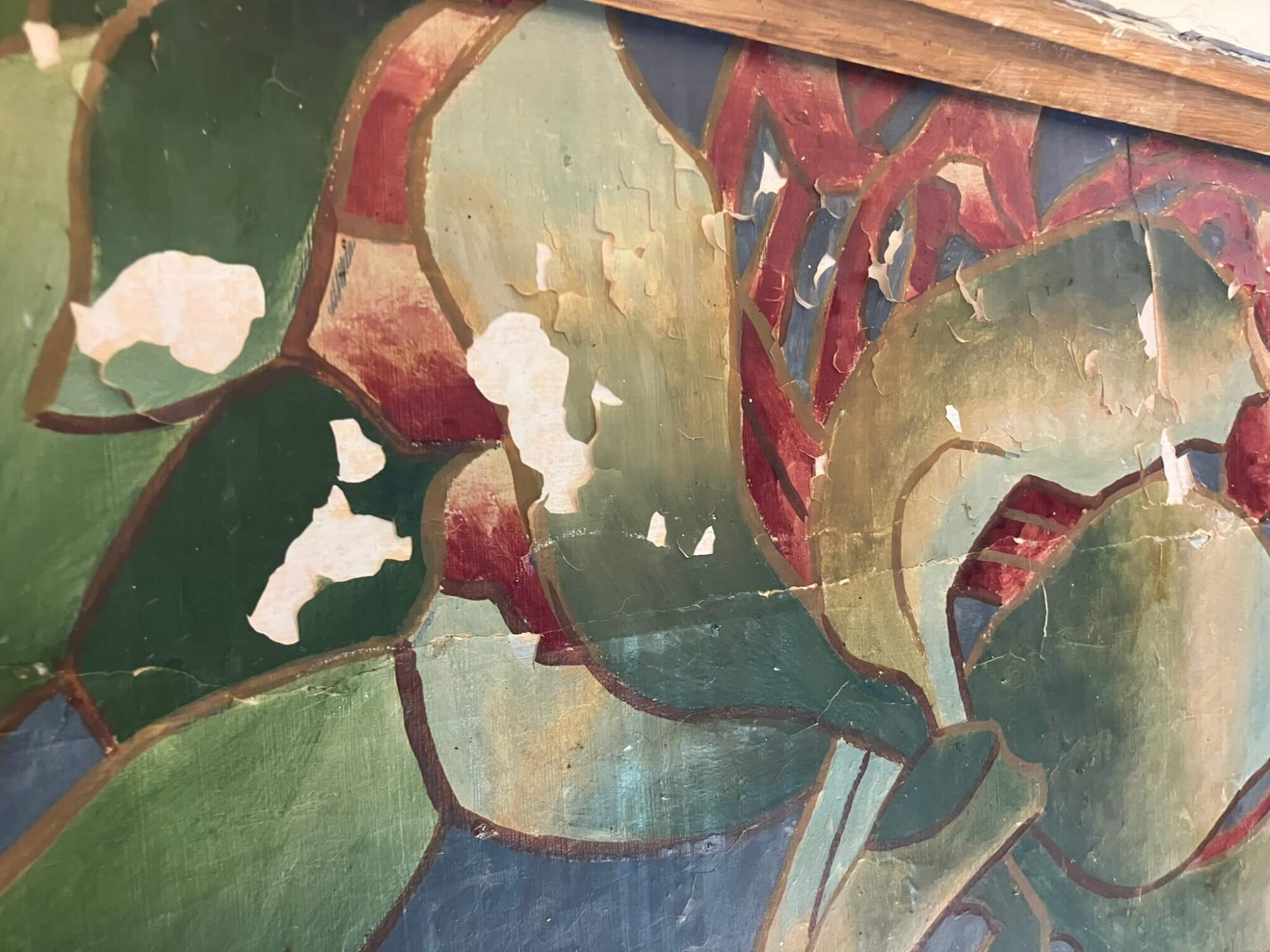
Detail of the decorative frieze before conservation treatment.
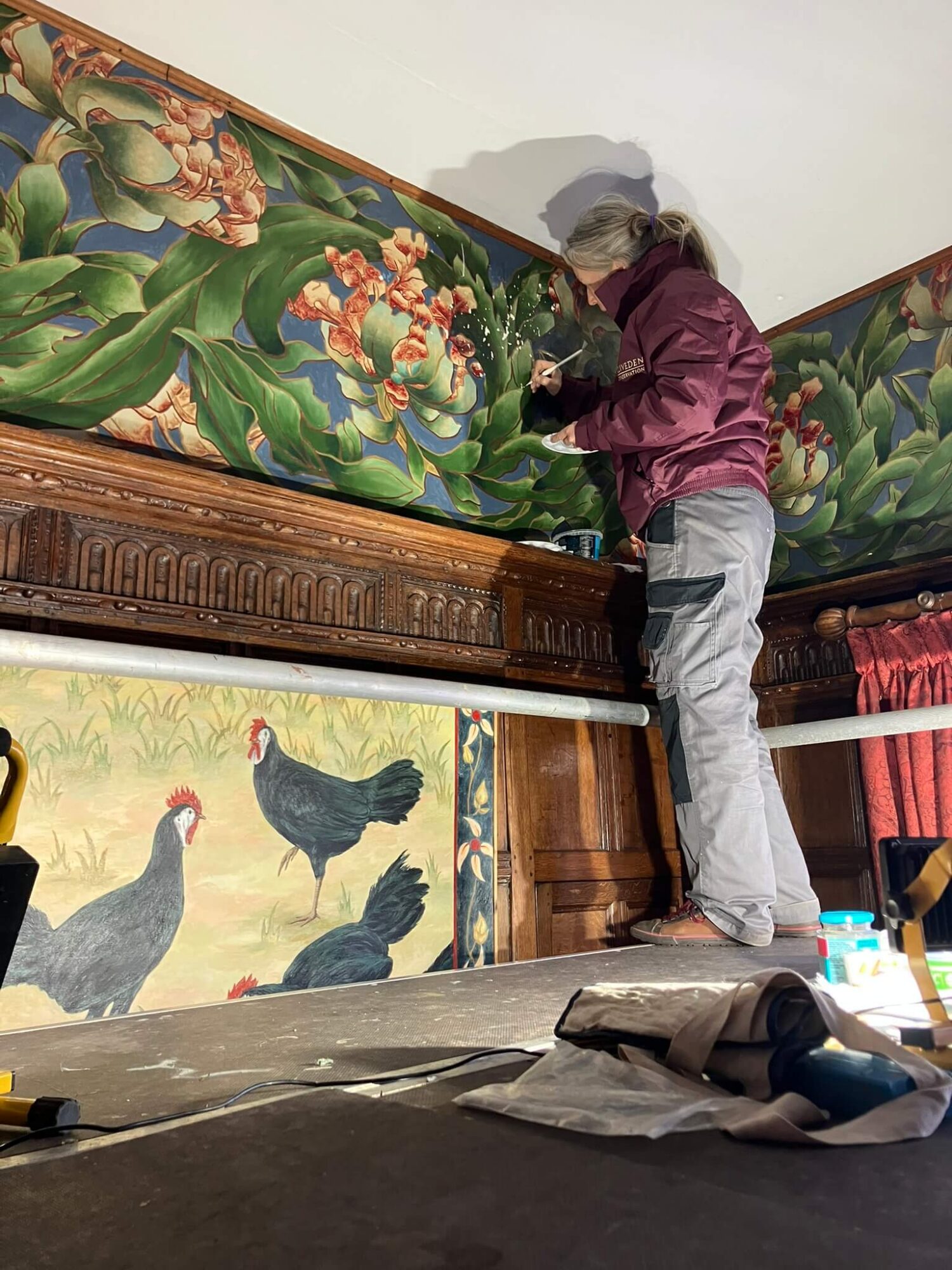
Conservator working on the decorative floral frieze.

Painted surface after retouching.

The Burghers of Calais mural after conservation treatment.

Detail of the decorative frieze after conservation treatment.

The client expressed great satisfaction with the
outcome of the project:
“Thank you so much to the team for the wonderful job you have done with our wall painting. No longer will we have to worry about pieces falling off every time we go near it. We have even bought a more powerful light bulb to better enjoy it. Would you be kind enough to come back and work your magic on the frieze in the main hall?”
“We are very happy with the work you undertook and enjoy the results every day. We also miss having you here, which was a joy.”
Plumpton House