CONSERVATION AND LIME MORTAR REPAIRS
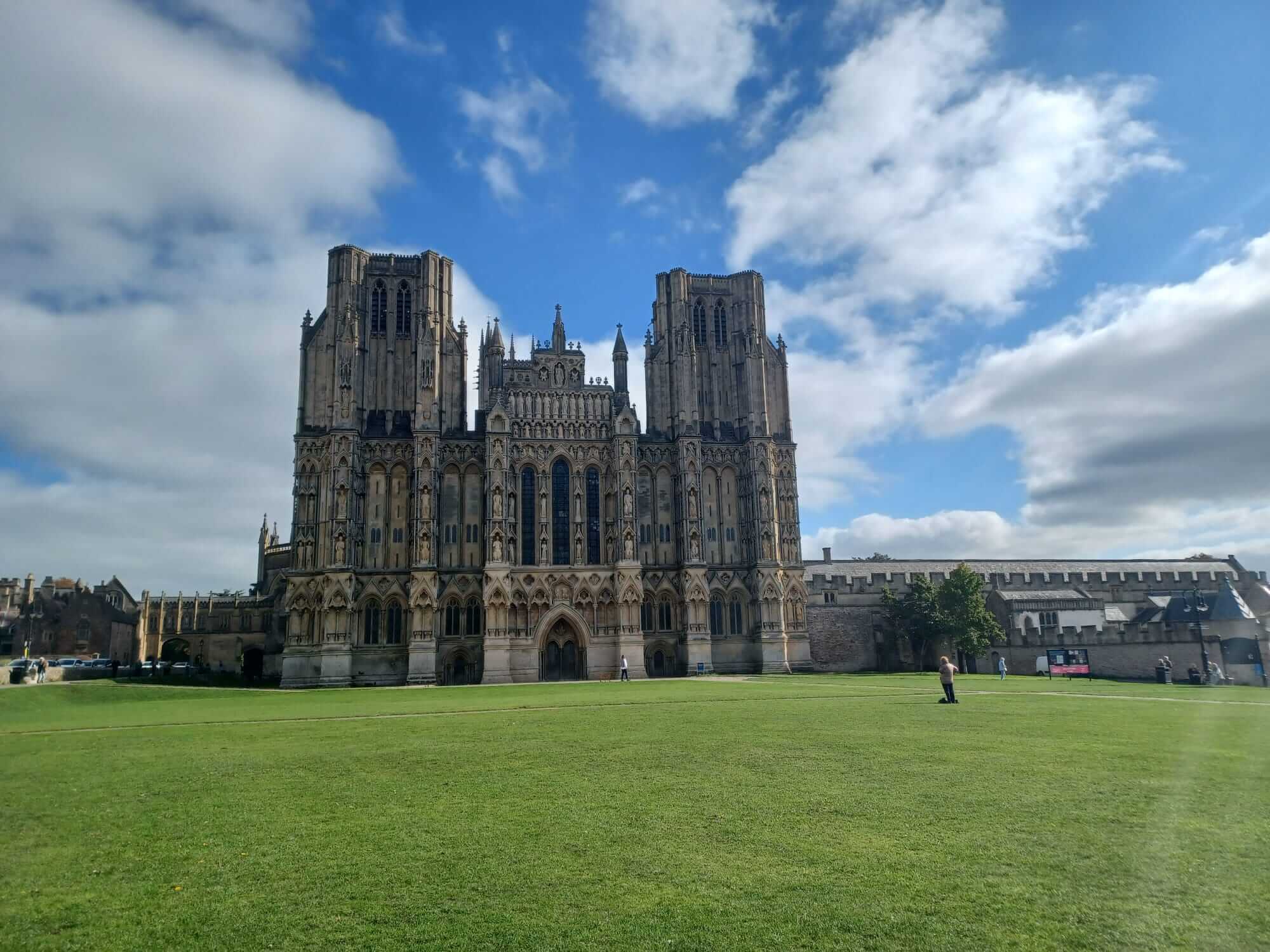
Cliveden Conservation was appointed by Wells Cathedral and Nick Cox Architects to undertake the second phase of conservation repairs to the medieval statues of the West Front of the cathedral.
The West Front dates from the 13th century, displaying over 300 statues including kings, queens, bishops, monks and knights. It is one of the largest collections of medieval statuary in England.
The project builds upon the meticulously planned and executed pilot phase of works conducted in 2022 by Cliveden Conservation. During that phase, conservators focused on cleaning and repairing the stonework and sculptures on the central top tiers above the West Window and developing a methodology for the repair. The second phase continued the brief but allowed for a greater focus on the surrounding architecture.
Challenges
Despite their age, many of the medieval statues retain remarkable detail, with some of them still exhibiting fragments of the original painted scheme, but centuries of weather damage and atmospheric pollution had left them vulnerable. Much of the carved detail was held in a case-hardened shell with the inside of the statues soft and friable. One statue was at risk of losing its legs and was hollow behind the chest. Others had lost limbs, and detailing to their clothing had been lost.
The architectural fleurons and decorative elements were in a poor and fragile state of repair, leading to discussions on the ethics of full stone replacements versus careful mortar repair.
Conservation Work Undertaken
Due to the friable nature of the figures and surrounding material, an in-depth survey of each statue was carried out by Cliveden Conservation before work commenced.
The extensive archive of historic reports was reviewed and drawn upon to better understand previous conservation interventions to each figure and any progression of decay. It was noticeable that previous architecture and sculptures were treated by separate teams with a separate approach; this second phase of works presented an opportunity to create a consistent approach.
The aim was to decelerate the rate of decay to the stone substrate and stabilise the stone. Conservation cleaning was undertaken to remove guano and biological growth from across the working area, in as much as this was required for repair works, not as a full clean.
Breathability of materials was crucial due to the fragile and deteriorated condition of the figures. Lime putty mortar repairs mixed with stone dust and aggregates to match the colour were used to recreate the lost detailing of the sculptures where conservators had sufficient information to follow form.
Following repairs, a lime-based sheltercoat was applied to disaggregated areas to help protect the surface.
Where the surrounding masonry and fleurons were felt to be beyond sensible mortar repair, but there was sufficient material to provide an indication of form, these were re-carved in the spirit of the original.
An additional challenge for the fleurons was their location behind Kilkenny columns, making the project technically challenging for the masonry team.
Results
Retention of the medieval fabric of the West Front of the cathedral remained central to Cliveden Conservation’s approach throughout this highly sensitive conservation project, with all parties working in collaboration to agree on an ethical and sensible approach.
The conservation team incorporated public engagement into the project delivery, offering guided access during pre-agreed specialist tours, and a discussion of the works during Heritage Open Days. Visitors gained rare close-up views of the statues while learning about the traditional conservation techniques used to preserve them.
Project details
Client:
Wells Cathedral and Nick Cox Architects
Specialist Contractor
Cliveden Conservation
Category:
Advisory and material analysis | Stonework
What we did
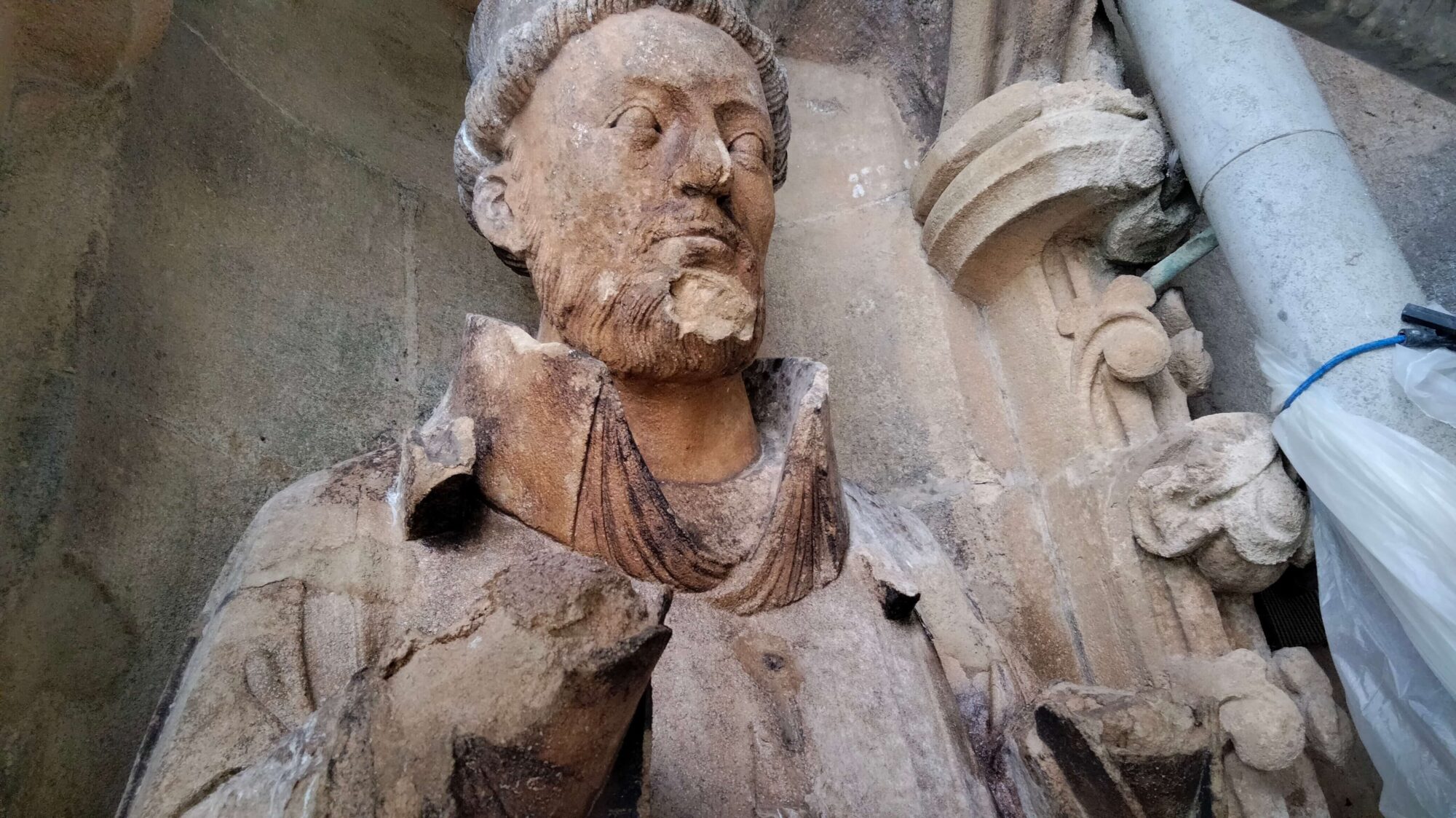
Centuries of weather damage and atmospheric pollution had left the statues vulnerable.
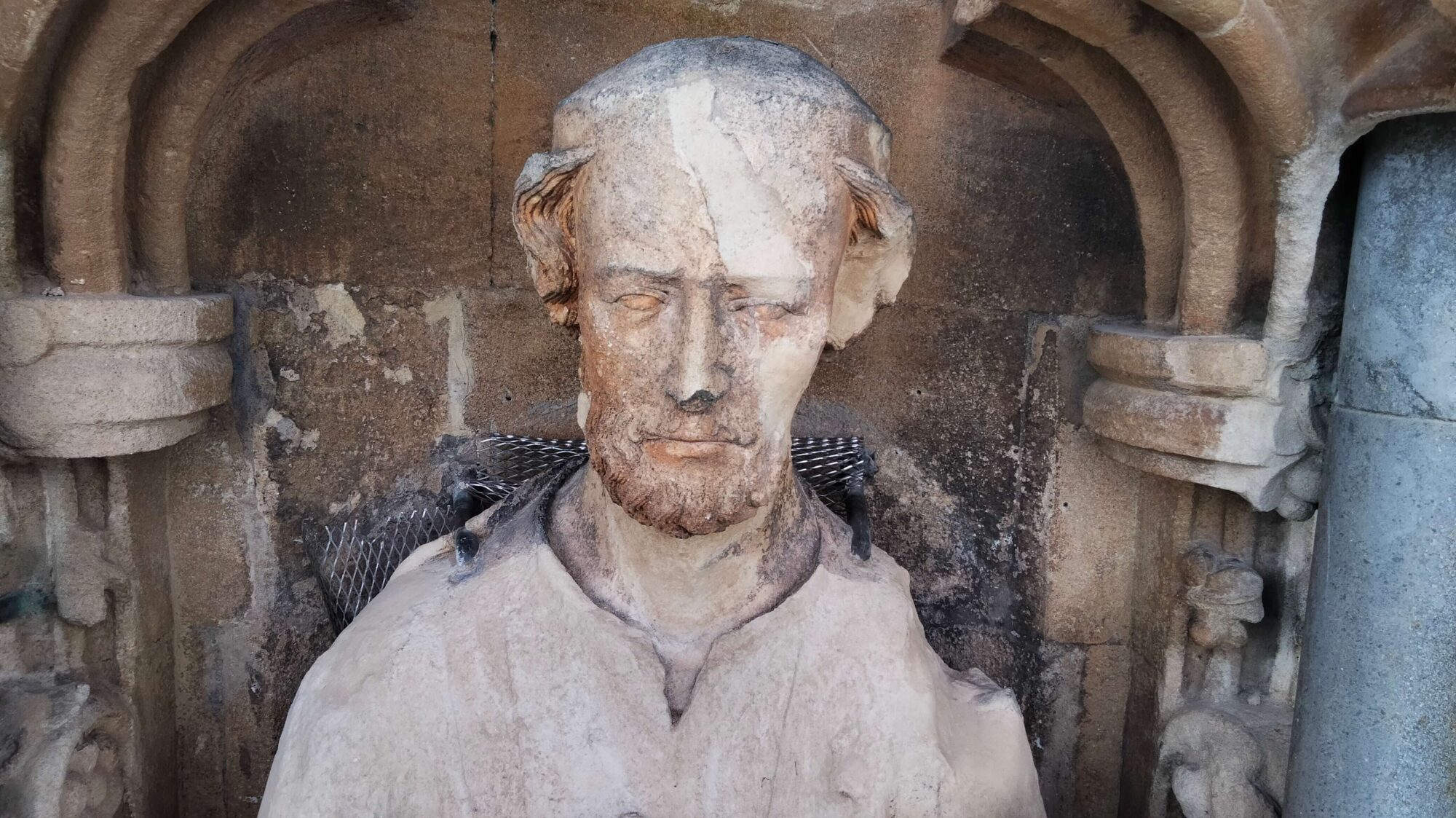
Lime putty mortar repairs mixed with stone dust and aggregates.
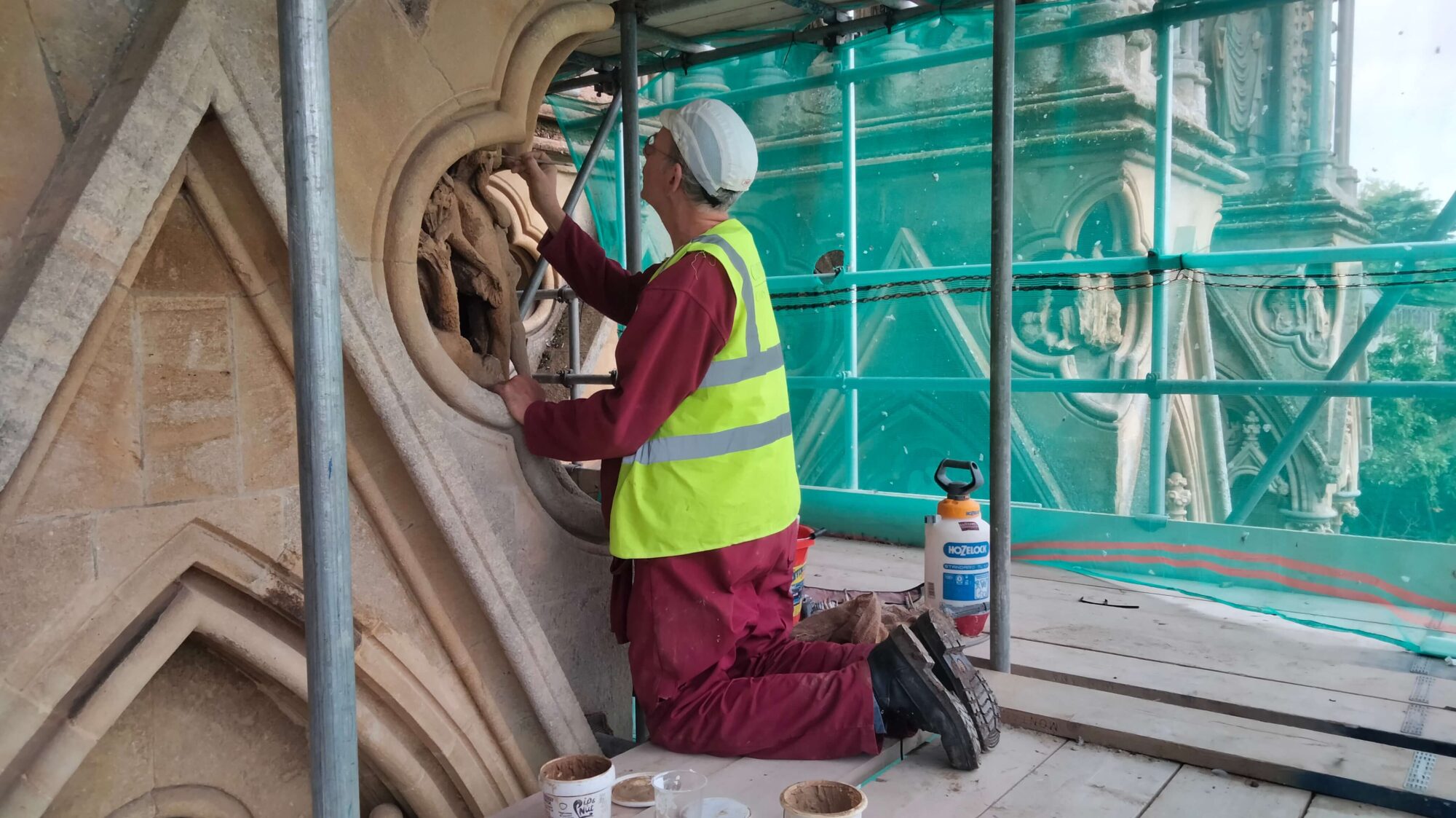
Conservation work being carried out.

Re-carving masonry and fleurons which were beyond repair.
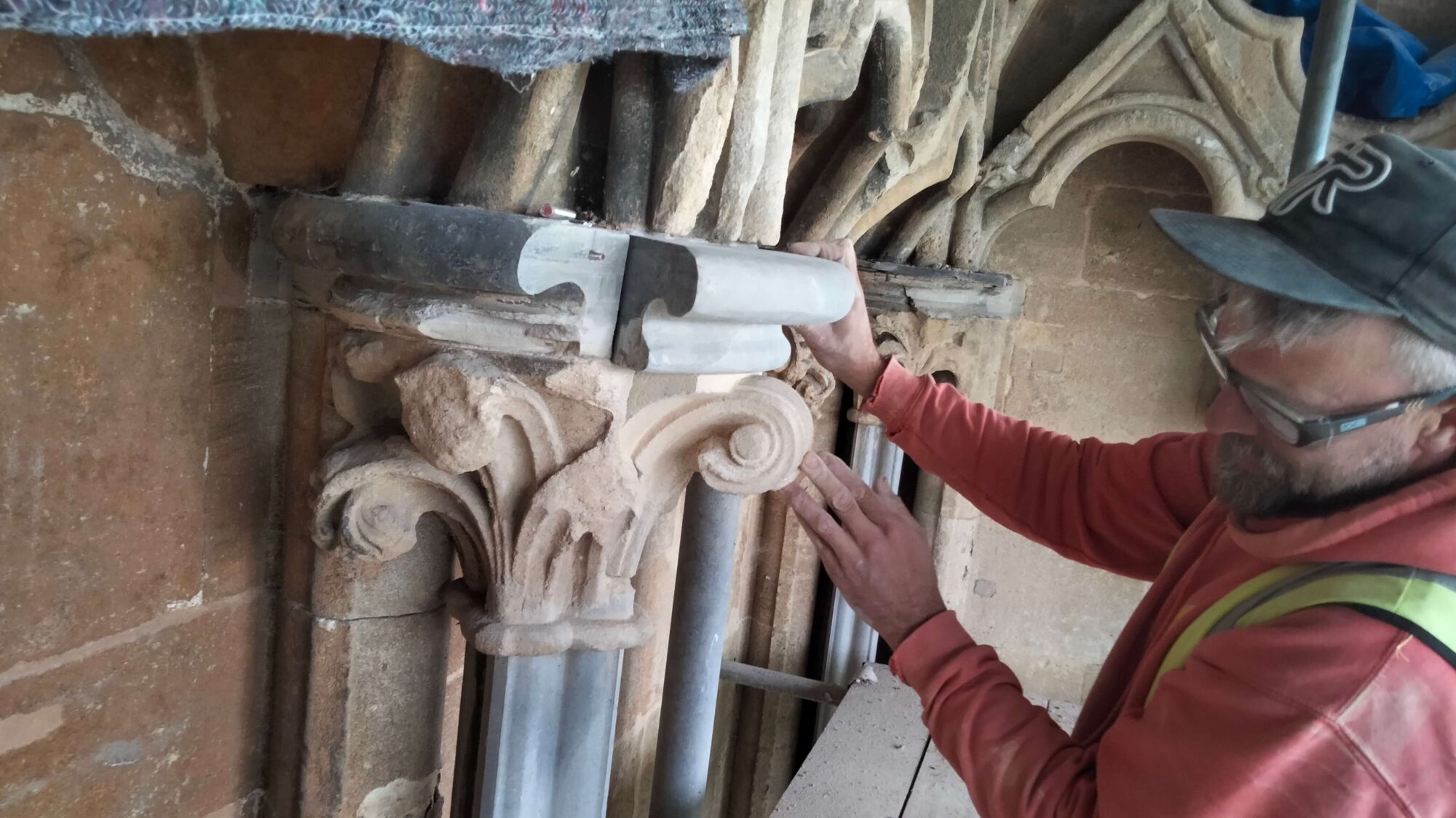
Replacement stone being fixed into position.
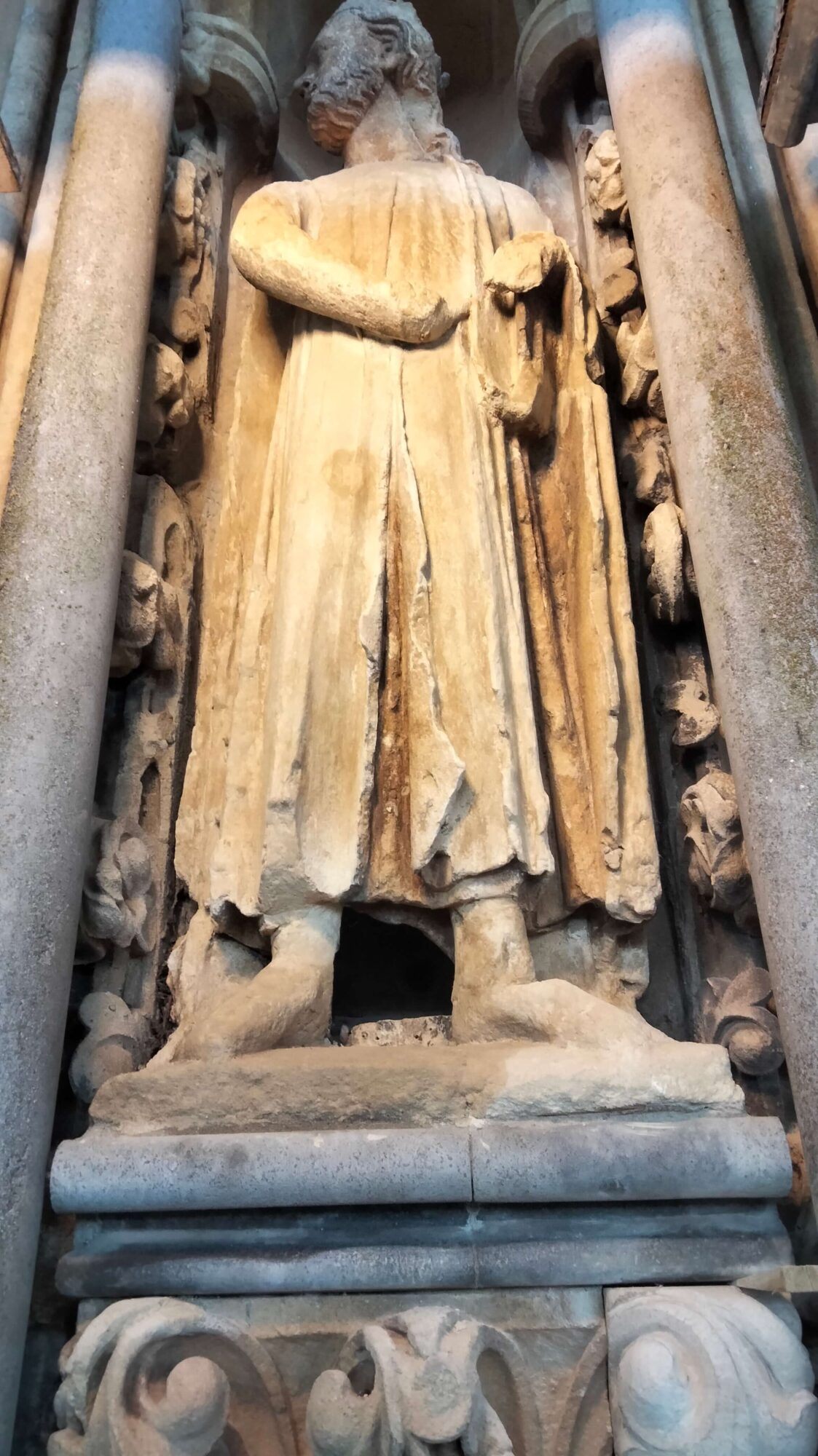
Conservation repairs to the medieval statues.
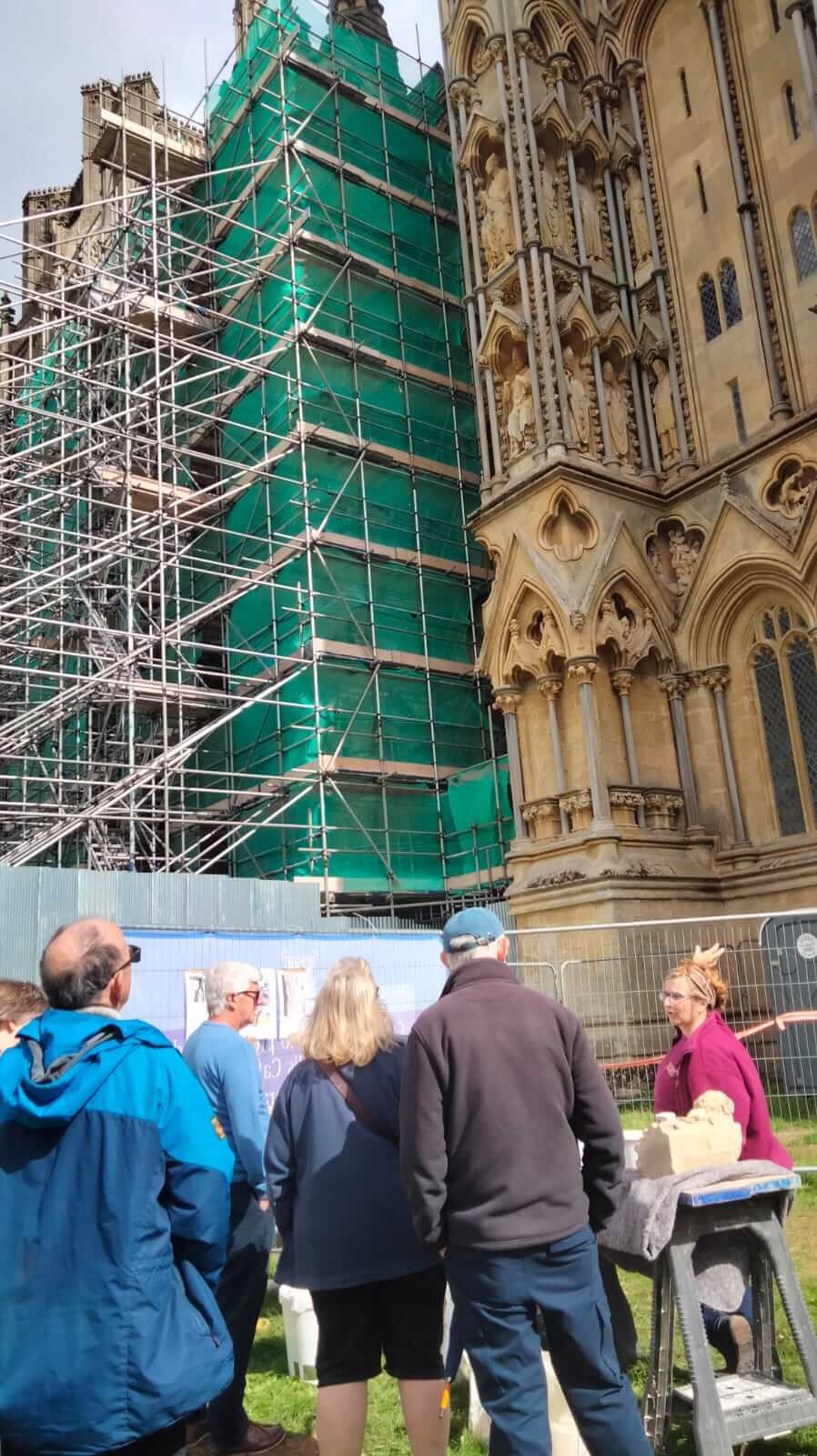
The conservation team incorporated public engagement into the project delivery during Heritage Open Days.