
LATH & PLASTER CEILING CONSERVATION | HISTORIC CHURCH
Holy Sepulchre London, Parish Church, is a Grade I listed building that dates back to the mid-15th century. In the Great Fire of London, the church was severely damaged and the interior was subsequently recreated with input from Sir Christopher Wren.
The lath and plaster ceiling which dates back to c.1837, presented various issues including cracking to the plaster and losses in some areas, with the paint now flaking. Major damage had been caused in areas where water ingress from the roof space caused timbers to rot and the lath and plaster construction to fail, leaving holes to the plaster vault work.
Cliveden Conservation was appointed to conduct a survey of all ceiling bays from below and from above within the roof space. The scope of works also included urgent restoration works to the lime plaster ceiling. The project was carried out in close collaboration with the architect Alan Frost and Revd. Nick Mottershead and his team.
Conservation Work
A collaborative approach to the access scaffolding was developed with a specialist subcontractor and a scaffold design company to build an oversized mobile tower. This allowed large areas of the church to continue functioning as normal without impeding the repair work.
Roof voids were cleared of debris accumulated over many years and laths and plaster nibs were checked. Any defects were noted and recorded, informing the system of repair.
Conservators undertook urgent works to the ceiling. This included consolidation of flaking paintwork, crack repairs, and penny washer repairs to hold up the historic plaster as well as replastering.
The process involved strategically screwing stainless steel washers into the sound lathwork, combined with strengthening failing nibs of plasterwork with a plaster reinforcement. This was applied from above, within the roof space, by Cliveden Conservation’s’ specialist rope access partners.
Laths which had fallen along with the plaster were replaced with new ones in riven oak and a new plaster applied. All bays were touched up with individually matched paintwork to blend in the interventions.
Project Challenges
Accessing the high-level areas of the vault, including the roof void, presented a significant challenge, particularly given the importance of keeping the church open for its busy programme of services, concerts, weddings and community events. It was essential that engagement with the community was not impeded by the works.
Careful collaboration with the church team ensured that planned events could take place safely. The work was scheduled during rehearsals and paused during events. This approach minimised disruption while keeping to the original programme timescales.
Results
The comprehensive programme of works undertaken by Cliveden Conservation has addressed the full extent of deterioration to the ceiling, including plaster cracking and loss, missing laths, falling plaster and flaking paintwork. The historic ceiling has been successfully made safe and has significantly improved the aesthetic.A full decoration programme is planned for the future.
Works were undertaken with minimal disruption to the church’s operations. The combination of MEWP, fixed scaffolds and mobile movable towers avoided scaffolding the whole church and closure to the public.
Project details
Client:
Parochial Church Council (PCC)
Specialist Contractor
Cliveden Conservation
Category:
Advisory and material analysis | Plaster
What we did
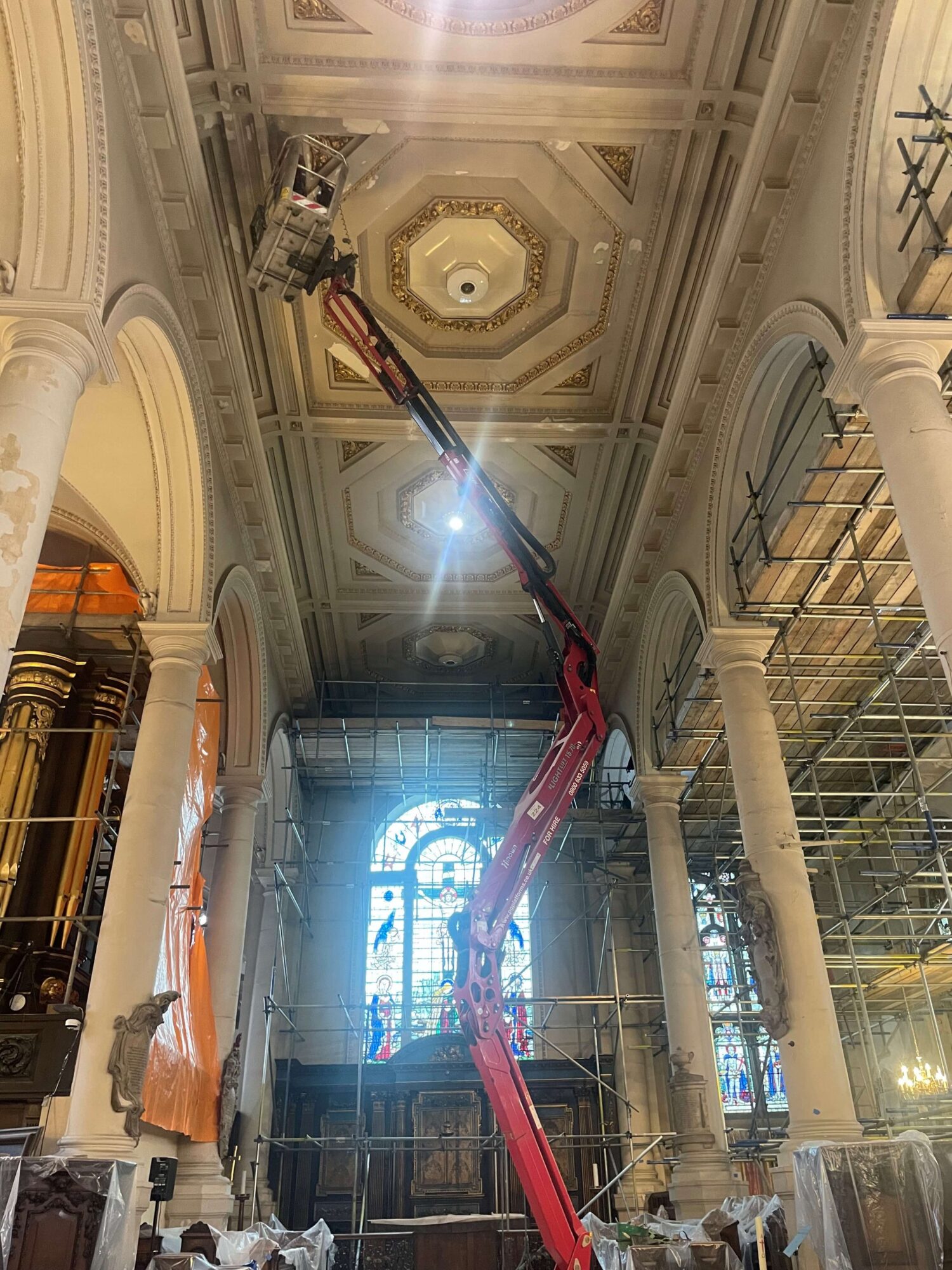
MEWP accessing the lath and plaster ceiling during conservation works.
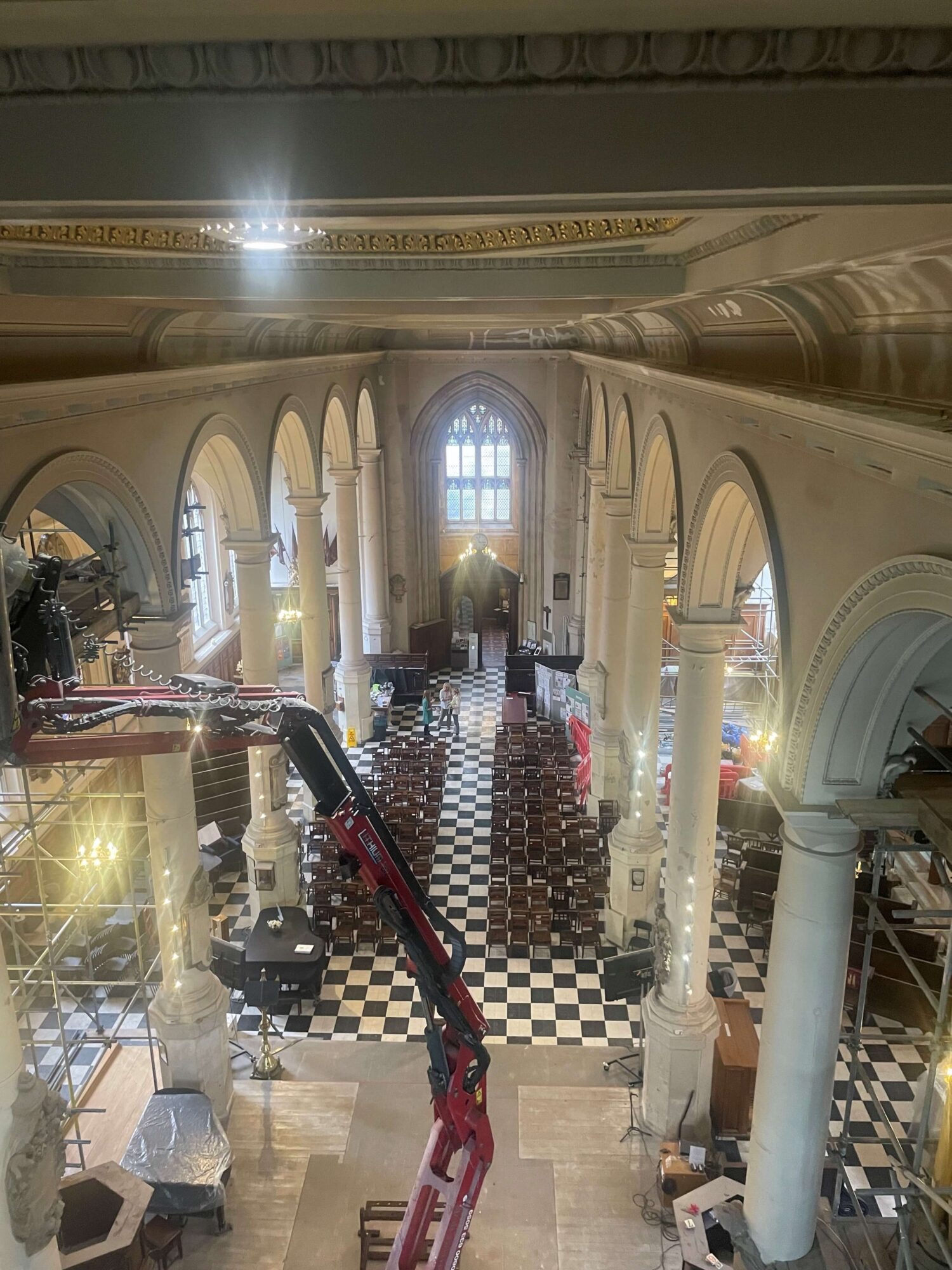
View along the nave of Holy Sepulchre London during conservation works.
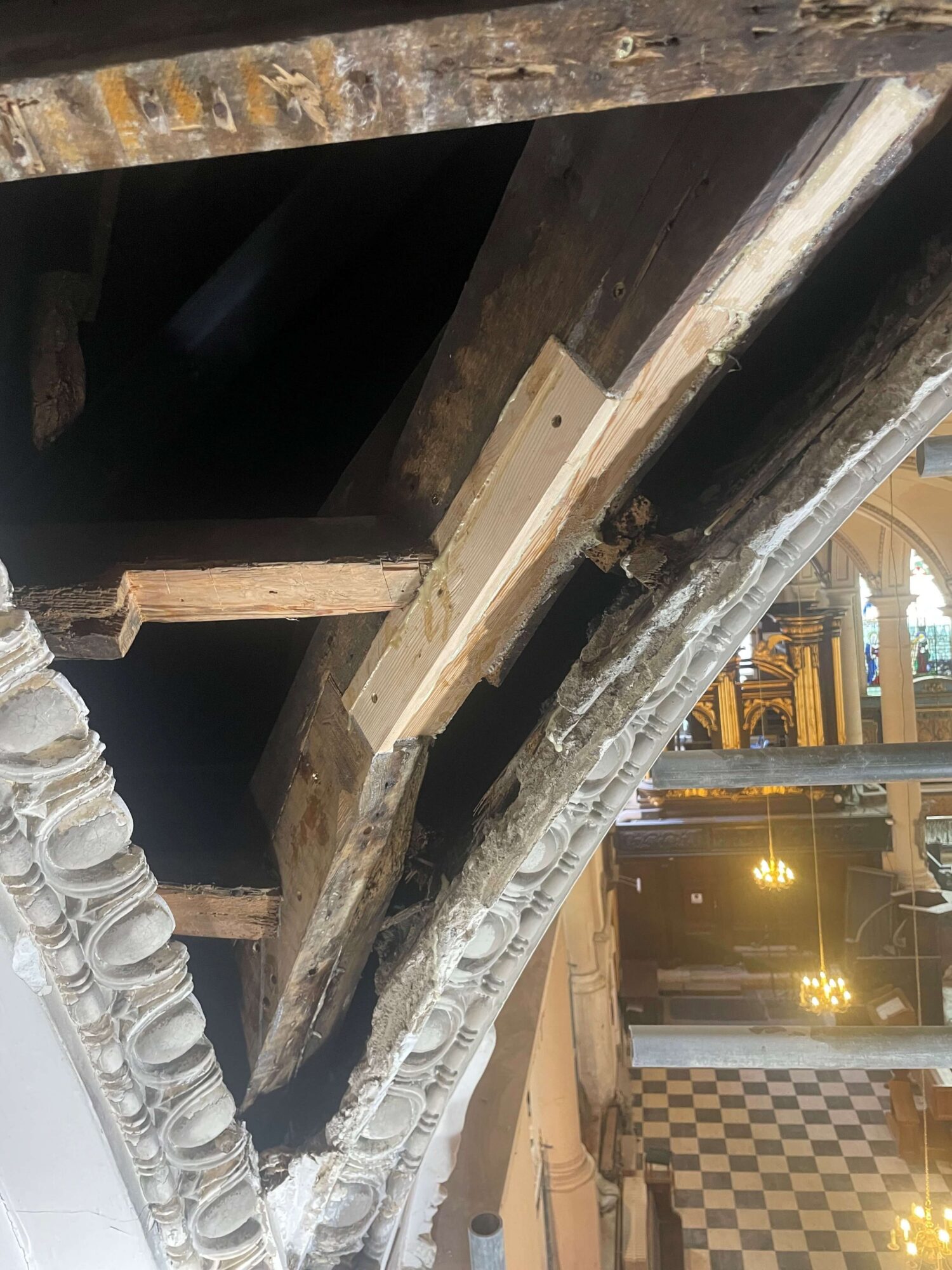
Close-up view from within the roof void at Holy Sepulchre London.
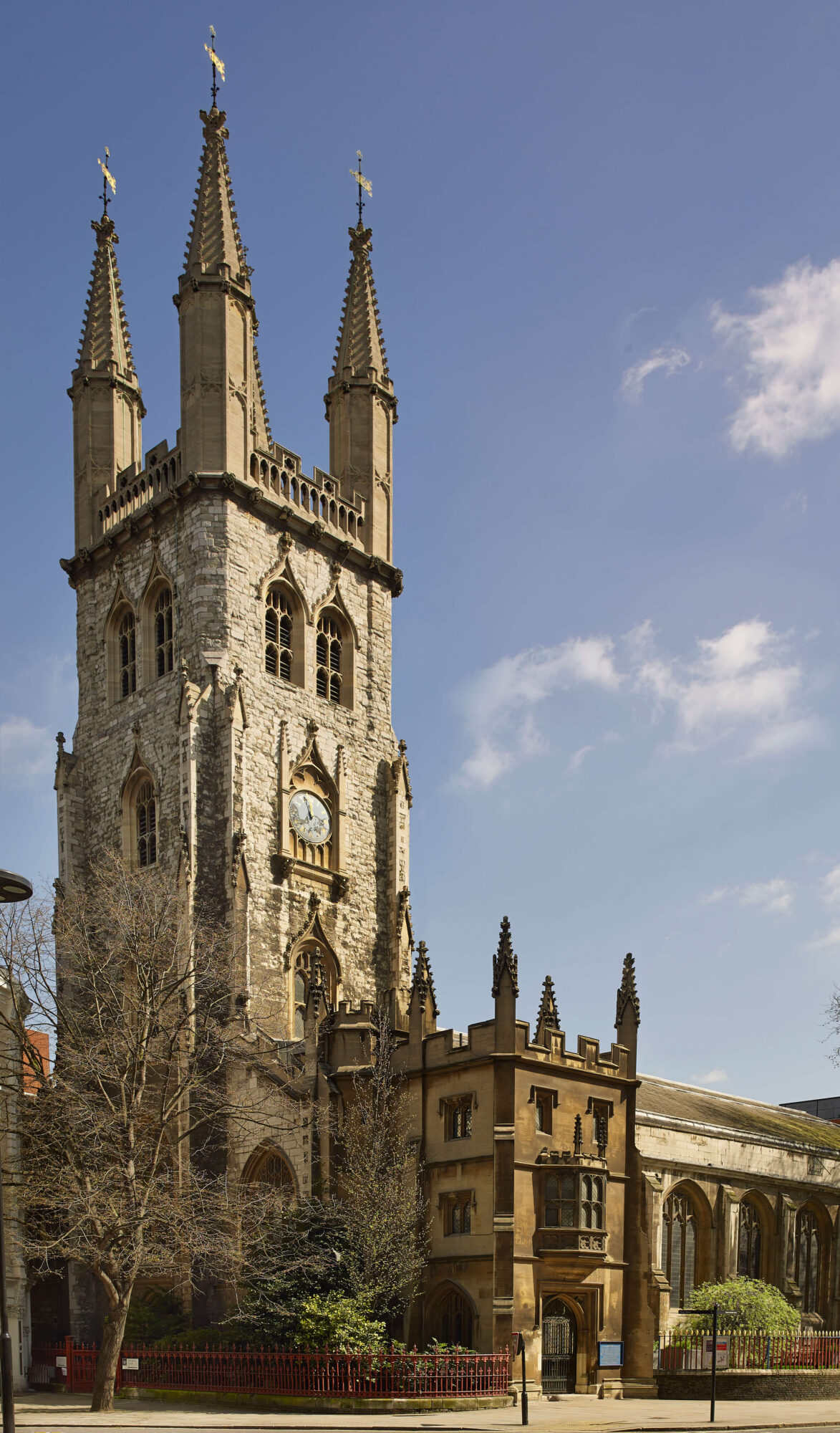
Exterior of Holy Sepulchre London.

Interior of Holy Sepulchre London.

“The collaborative approach alongside the innovative use of moveable platforms minimised disruption and enabled the church to meet its objective of remaining mostly open over the six months, to minimise impact on the communities while still keeping to the programme timescales.”
The Revd Nick Mottershead FCA, Rector, Holy Sepulchre